Exploring the Feynman Technique: Simplifying Complex Concepts for Effective Self-Learning

Understanding the Feynman Technique
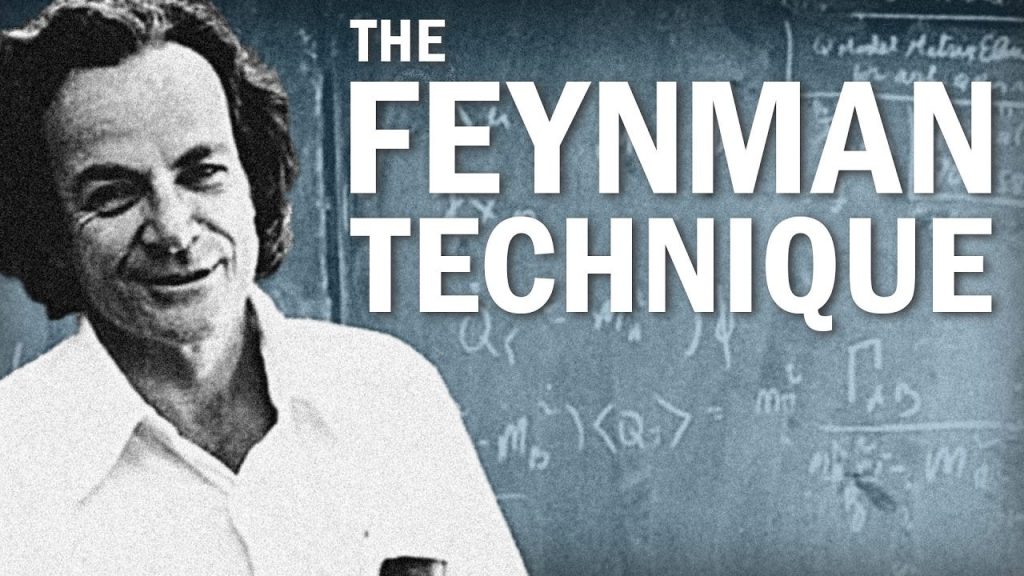
The quest for knowledge often leads us through intricate concepts that can be daunting to grasp. Enter the Feynman Technique, a powerful method named after the renowned physicist Richard Feynman, designed to make complex ideas more accessible. By breaking down challenging subjects into simpler components, this technique paves the way for effective self-learning.
At its core, the Feynman Technique revolves around a handful of key features that not only aid in understanding but also enhance retention of information. The first aspect, simplification, focuses on reducing complex topics into plain language. This approach allows learners to strip away jargon and technical terms, replacing them with everyday language that is easier to digest. For instance, instead of explaining Newton’s laws of motion using intricate formulas, you could explain them using relatable examples, like a soccer ball flying through the air after being kicked.
The second component, visualization, encourages the use of diagrams and sketches to clarify difficult concepts. Visual aids can turn abstract ideas into concrete images. When one learns about the water cycle, for example, drawing a diagram depicting evaporation, condensation, and precipitation can significantly enhance memory retention while providing a useful reference for future review.
The third feature, teaching, emphasizes the importance of articulating learned material to others. This can transform solitary study sessions into dynamic discussions. By explaining concepts to peers or even to an imaginary audience, students can reinforce their own understanding and pinpoint any gaps in their knowledge. This method is especially beneficial in collaborative learning environments prevalent in U.S. classrooms, such as study groups or project presentations.
The Feynman Technique is particularly valuable in subjects like science or mathematics, where complex theories and mathematical principles intertwine. Students applying this method in their studies can tackle subjects such as physics, chemistry, and calculus, breaking each topic down into manageable parts that encourage deeper comprehension.
Moreover, the appeal of the Feynman Technique extends beyond academia. Professionals in fields like engineering, law, and technology can use its principles to distill complicated concepts into understandable outlines, enabling better communication with clients or colleagues. In this way, the technique not only enhances retention but also fosters a genuine appreciation for the subject matter.
As we delve deeper into its principles, you’ll discover how to leverage this method to simplify your learning and become more adept at mastering even the most complicated topics. Fellow learners, whether in school or in your professional endeavors, the Feynman Technique may just be the key to unlocking a deeper comprehension of the world around you.
DISCOVER MORE: Click here to learn about the significance of reflection in learning
The Core Principles of the Feynman Technique
To truly benefit from the Feynman Technique, it is essential to understand the four pivotal steps that form its foundation. This structured approach not only democratizes knowledge but also fosters an engaging learning environment, making it easier to tackle difficult subjects. Below is a breakdown of these critical steps:
- Identify the Topic: Begin by selecting a specific concept or subject that you wish to learn or understand better. It could range from quantum mechanics to basic economic principles. The clearer the topic, the more focused your learning will be.
- Teach it to a Child: Attempt to explain the concept as if you were teaching it to a child. This aspect of the Feynman Technique encourages the simplification of complex terminology and theories. By translating jargon into everyday language, you ensure that you grasp the core idea rather than just memorizing facts.
- Identify Gaps in Understanding: As you explain the concept, you may find areas where your understanding wavers. This identification process is crucial, as it highlights the aspects of the topic that require further research. Acknowledging gaps allows you to return to the source material with specific questions in mind, enhancing your self-study efficiency.
- Review and Simplify: The final step involves reviewing your explanation. Go back through the concepts, seeking additional simplifications or clarifications. This iterative process reinforces learning and ensures that your knowledge is both comprehensive and accessible.
The Feynman Technique can be particularly effective in various academic disciplines. For instance, students learning physics can apply this method to elucidate the principles of electromagnetism. Instead of getting lost in mathematical equations, they can break down the principle of electric fields into basic terms, like “the area around a charged object where its electric force can be felt.” This simplification provides a foundational understanding that students can build upon as they encounter more complex equations.
Additionally, the technique is not limited to academic excellence. It blends well with the continuous learning that professionals often pursue. Whether it’s a lawyer deciphering complex regulations or a tech professional mastering new software, applying the Feynman Technique makes complicated material manageable. It cultivates a more meaningful engagement with the subject, ultimately leading to better competence in the field.
As we explore more about the Feynman Technique and its implementation in everyday learning, you will discover how employing these steps can transform your approach to acquiring new knowledge. With persistence and practice, this technique empowers learners to unravel layers of complexity and foster an ongoing curiosity about the world around them.
Understanding the Feynman Technique
The Feynman Technique, named after the renowned physicist Richard Feynman, is a powerful method to enhance understanding and retention of complex information. At its core, this technique emphasizes effective self-learning by breaking down intricate concepts into simpler components, making them easier to grasp and remember. By actively engaging with the material and expressing it in layman’s terms, learners can identify gaps in their knowledge and reinforce their comprehension.
The method follows a simple four-step process: choose a concept, teach it to a child or an unknowledgeable audience, identify areas of confusion, and simplify or refine your explanation. This hands-on approach encourages critical thinking and deepens one’s understanding, with a focus on clarity and coherence. Whether you’re a student striving to master a challenging subject or a professional seeking to expand your expertise, embracing the Feynman Technique can lead to remarkable improvements in learning efficiency.
Applications in Various Fields
The versatility of the Feynman Technique extends across various fields, including science, mathematics, and even the arts. Students are encouraged to apply this method when studying for exams or trying to grasp new concepts. Professionals can utilize it when explaining complex ideas to clients or colleagues, making it an invaluable communication tool. Simplifying information not only aids retention but also fosters collaboration and understanding among diverse audiences.
| Advantages | Key Features |
|---|---|
| Enhanced Learning | Breaks down complex ideas into simple language. |
| Active Engagement | Promotes critical thinking and retention through teaching. |
By initiating the exploration of the Feynman Technique, readers are urged to think critically about their learning processes and identify areas for improvement. This results in enhanced clarity and a deeper connection to the material, driving the motivation to seek out further knowledge and understanding.
DISCOVER MORE: Click here for insights on building a supportive learning environment
Applying the Feynman Technique Across Various Fields
While the Feynman Technique is often celebrated in academic settings, its utility extends far beyond the classroom. In fact, professionals across a multitude of industries can benefit immensely from this approach, simplifying complex ideas and facilitating effective self-learning. Let’s delve into a few compelling examples of how this technique can apply to various domains.
In the World of Business
For business professionals, comprehending intricate financial models or market analytics can initially seem daunting. Utilizing the Feynman Technique allows them to break down these concepts into digestible components. For instance, a marketing strategist might grapple with digital metrics like click-through rates or conversion rates. Rather than memorizing numbers, they could explain the concepts using familiar analogies, like comparing a sales funnel to a traditional funnel used in cooking, where potential customers begin wide at the top and narrow down to a more refined group willing to purchase. This method not only reinforces their understanding but also equips them to communicate insights effectively with colleagues or clients.
Science and Engineering Applications
In the fields of science and engineering, complex theories often intertwine with intricate technical language, making it challenging for even seasoned professionals to keep pace. Consider, for example, a mechanical engineer studying the principles of thermodynamics. By teaching the laws of thermodynamics as if to a novice, they might simplify the first law—energy conservation—into the analogy of a busy kitchen where ingredients transform and move but don’t vanish. Such methods not only bolster personal comprehension but enrich collaborative discussions within workplace teams.
Healthcare and Medical Education
The Feynman Technique can play a pivotal role in medical education, where mastering a substantial amount of information is essential. Medical students might face the overwhelming task of memorizing human anatomy or complex physiological processes. By attempting to teach these subjects to others, such as fellow students or even friends, they can clarify their understanding, making anatomical terms more relatable. Instead of stating that “the heart pumps oxygenated blood through the aorta,” they could express it as “the heart is like a pump that sends freshly oxygen-filled blood to the body’s highways.” This process not only helps them retain information but also builds compassionate communication skills, crucial for patient interaction.
Technology Mastery
With rapid technological advancements, professionals must continually adapt and learn new software or programming languages. Here, the Feynman Technique becomes invaluable. A software engineer could start with a complex programming paradigm like object-oriented programming. By explaining the concept using everyday language—comparing objects in programming to real-world objects that possess characteristics and behaviors—they can demystify the complexities and make the learning process more approachable.
Across these examples, it’s evident that the Feynman Technique enables learners to engage with material more actively and innovatively. Through teaching and simplifying, they cultivate not just knowledge but also a sense of ownership over their learning journey, paving the way for a more profound understanding of their respective fields.
DIVE DEEPER: Click here to discover more
Conclusion: Embracing the Feynman Technique for Lifelong Learning
In an age where information is readily available yet often convoluted, the Feynman Technique emerges as a beacon for both personal and professional growth. This method of distilling complex concepts into simple terms not only enhances comprehension but also fosters a more engaging and meaningful learning experience. As demonstrated across diverse fields—be it business, science, healthcare, or technology—the ability to articulate intricate ideas in straightforward language can bridge gaps in understanding, leading to increased collaboration and communication.
Furthermore, the Feynman Technique encourages a mindset of continuous inquiry. By teaching or simplifying information for others, individuals reinforce their own knowledge while cultivating a deeper connection with the material. This process transforms learning from a passive activity to an active pursuit, where curiosity drives exploration, leading to enhanced problem-solving abilities and innovation.
For learners at any stage—whether students, professionals, or lifelong enthusiasts—the implications are clear. Embracing the Feynman Technique is not just about mastering a subject; it’s about developing a robust foundation for critical thinking and complex reasoning. As you journey through the wealth of knowledge that surrounds you, consider implementing this powerful technique to simplify complexities and empower your learning path. Ultimately, effective self-learning is about making connections, and the Feynman Technique equips you with the tools necessary to navigate the intricate web of knowledge with confidence.