Mind Mapping as a Practice Technique: Visualizing Your Learning Journey
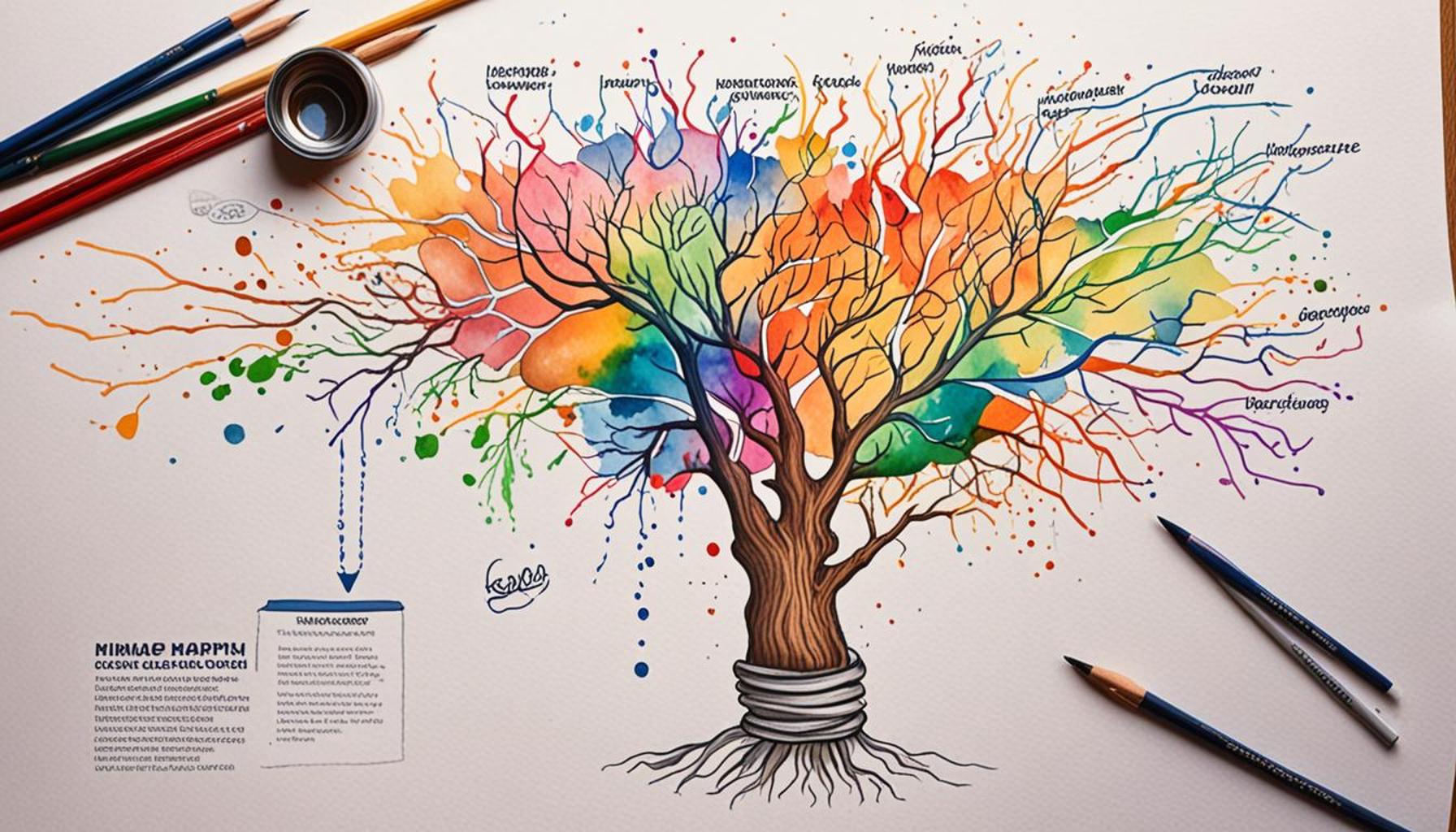
Unlocking the Potential of Your Mind
In today’s fast-paced world, effective learning and retention have become paramount. How can we represent our thoughts visually to enhance understanding? Mind mapping offers a unique approach to organizing information, facilitating comprehension and memory retention. This powerful tool transcends traditional note-taking and is gaining popularity across various fields, promising to enhance both personal and professional productivity.
Why Mind Mapping Matters
This creative technique engages both the left and right hemispheres of your brain, empowering you to:
- Visualize concepts: By transforming words into images, mind maps create a clear picture of complex relationships. For instance, when studying biology, a student can illustrate the interdependence of ecosystems, showing how each component plays a critical role.
- Enhance creativity: Mind mapping stimulates innovative thinking through free association. Artists and writers, for example, often use mind maps to brainstorm new ideas, visually connecting themes and concepts that spark inspiration.
- Streamline learning: Mind maps allow you to organize key points easily for better recall. Students preparing for standardized tests can create a map summarizing chapters, leading to improved retention of important facts and concepts.
As we navigate through our learning journeys, traditional note-taking methods often fall short. Enter the world of mind mapping, where your ideas flourish on a single page, providing clarity like never before. Unlike linear notes that can leave students feeling overwhelmed, mind maps lay out information hierarchically, making it easier to spot connections. This format not only aids comprehension but also encourages an active learning process.
Real-Life Applications
From students preparing for exams to professionals brainstorming projects, mind mapping can serve a multitude of purposes:
- Planning essays and research papers: Students can organize their thoughts before they start writing, visualizing their thesis and supporting arguments.
- Structuring business strategies: Entrepreneurs have utilized mind maps to outline business models and market research, helping them identify opportunities and risks.
- Facilitating group discussions and collaborations: In corporate settings, teams can employ mind mapping during meetings to gather and visualize input from all members, leading to enhanced engagement and innovative solutions.
Overall, the adaptability of mind mapping makes it suitable for various disciplines—be it in education, corporate settings, or creative projects. As we delve deeper into the practice and explore various techniques, you can expect to transform your learning experience into a rich visual journey—one that not only improves retention but also invigorates your approach to problem-solving and idea generation.

DISCOVER MORE: Click here to learn how a growth mindset enhances self-directed learning
Harnessing the Power of Mind Mapping
In a world where the volume of information is ever-increasing, the traditional methods of learning often struggle to keep pace. Mind mapping offers an innovative solution that not only simplifies complex data but also enhances retention through its visual nature. Mind mapping transforms non-linear information into a structured format, allowing learners to engage with material on a deeper level. As you immerse yourself in this technique, you will discover that the connections generated can lead to profound insights and a more holistic understanding of the subject matter.
The Science Behind Mind Mapping
At its core, mind mapping is rooted in cognitive psychology. Research shows that our brains are wired to remember visual stimuli better than text alone. In fact, a study published in the journal Learning and Memory indicates that visual information is processed 60,000 times faster than text. This highlights the importance of engaging multiple senses during the learning process. When you create a mind map, you are actively constructing a visual representation of your knowledge, which taps into both visual and kinesthetic learning styles. As a result, learners of all types can benefit from this approach.
How to Create an Effective Mind Map
Creating a mind map may seem daunting at first, but once you grasp the basics, it becomes an empowering tool in your learning arsenal. Here’s a simple step-by-step guide:
- Start with a central idea: Write your main concept in the center of the page. This could be the title of a topic you are studying, such as “Environmental Sustainability.”
- Add branches: Draw lines outward from the central idea to represent major subtopics or themes. These can include relevant subjects like “Renewable Energy,” “Waste Management,” and “Conservation the Disadvantages of Single-Use Plastics.”
- Incorporate keywords and images: Use keywords to label each branch and add images or symbols that represent ideas, ensuring that you activate your creativity. Remember, visuals boost comprehension.
- Make connections: Link related branches with lines, establishing connections between ideas. For example, you might connect “Renewable Energy” to “Solar Power” and “Wind Energy,” demonstrating their relationship within the overarching topic.
- Review and revise: Your mind map is a living document. As your understanding deepens, feel free to adjust and expand it to reflect new insights.
By embracing this method, you gain the ability to visualize not only the information but the journey of learning itself. Moving beyond simple fact memorization, mind mapping invites exploration of ideas and encourages creative problem-solving, making it an ideal practice technique for students and professionals alike.
Understanding Mind Mapping Techniques
The process of mind mapping serves as a unique technique in organizing thoughts and visualizing connections between ideas. This practice not only enhances memory retention but also facilitates better understanding by illustrating complex concepts in a visually engaging way. By placing the main topic at the center, users can branch out ideas, allowing them to see the entirety of their learning journey in one glance.
Why is Visualizing Important?
Visualizing information significantly impacts how we process and retain data. Research has shown that when individuals visualize concepts through diagrams or maps, they can comprehend and recall information more effectively. Mind mapping transforms traditional note-taking by integrating visual elements, which can be particularly beneficial for visual learners who may struggle with text-heavy formats.
Applications of Mind Mapping
Mind mapping can be applied across various domains, from education to project management. In an educational setting, students can use mind maps to break down subjects into manageable sections, aiding in exam preparation or research projects. Similarly, project managers can outline tasks, resources, and timelines within a mind map, ensuring that every aspect is accounted for in a clear and concise manner.
The Psychology Behind Mind Mapping
At the core of mind mapping lies its psychological benefits. Understanding how our brains function in terms of memory and association allows us to leverage mind mapping effectively. By associating ideas with vibrant visuals, learners can activate multiple areas of the brain, leading to a richer cognitive experience. Studies indicate that users of mind maps not only memorize information better but also develop critical thinking skills as they navigate relationships between concepts.
Getting Started with Mind Mapping
Starting your mind mapping journey doesn’t require advanced tools. Simple pen and paper can be incredibly effective. Alternatively, numerous software applications facilitate the creation of intricate mind maps with ease. These digital platforms often come equipped with collaborative features, enabling groups to connect and share ideas in real-time, enhancing collective learning experiences.
Mind Mapping in Professional Development
In the context of professional growth, mind mapping can serve as a powerful tool for brainstorming ideas, planning presentations, or strategizing on business projects. By providing a visual overview of various components, it allows professionals to identify priorities and focus areas. This technique promotes creativity and innovation, encouraging individuals to explore unconventional approaches to challenges they may face in their careers.
Final Thoughts on Mind Mapping
As we explore the multifaceted benefits of mind mapping as a practice technique, it becomes increasingly clear that visual learning strategies can enhance cognitive processes across various fields. Whether applied in education, business, or personal development, mind mapping offers a versatile approach to organizing thoughts and advancing one’s learning journey. The potential for unlocking creativity and promoting deeper understanding is why so many learners and professionals are embracing this dynamic technique.
| Advantage | Description |
|---|---|
| Enhanced Memory Retention | Using visuals helps cement ideas, making recall easier. |
| Improved Understanding | Illustrates complex concepts simply and effectively. |
DIVE DEEPER: Click here to discover more techniques
Enhanced Engagement Through Mind Mapping
Engagement is a crucial component of effective learning, and mind mapping serves as a wonderful bridge to foster that connection. When students actively create a mind map, their minds become engaged in a multi-layered learning experience. Unlike passive study methods, where reading and highlighting often lead to surface-level retention, mind mapping invites active participation. A study from Stanford University revealed that learners who utilized mind mapping retained information better and displayed improved critical thinking skills compared to those using conventional methods.
Practical Applications in Education and Beyond
The versatility of mind mapping extends beyond the classroom, proving to be beneficial in various fields. For educators, it can serve as an invaluable tool for lesson planning. By visually organizing course content, teachers can ensure comprehensive coverage while also accommodating different learning styles in their classrooms. For example, a teacher planning a unit on World History might create a mind map outlining key events, figures, and themes, making complex interactions more understandable for students.
In the corporate landscape, mind mapping finds its place in brainstorming sessions, project management, and strategic planning. Businesses in the United States have adopted mind mapping software tools like MindMeister and XMind to facilitate collaborative efforts and improve communication. These tools allow teams to visualize project frameworks, making it easier to identify potential roadblocks, allocate tasks, and ensure that all members stay aligned with company objectives.
Mind Mapping and Technology: A Modern Twist
With the advancements in technology, mind mapping has evolved from hand-drawn diagrams to sophisticated digital tools. Applications like Lucidchart, MindNode, and Coggle not only enhance the visual experience but also allow for real-time collaboration and sharing. In a world that increasingly values digital communication, these tools enable users to create dynamic and interactive mind maps, incorporating multimedia elements such as videos, links, and attachments. For instance, a student studying for a biology exam can embed infographic links, scientific articles, or even podcasts directly into their mind maps, thus enriching their study sessions with varied resources.
Mind Mapping for Personal Development
Beyond academia and professional environments, mind mapping has gained traction as a self-development tool. Individuals can use it for personal goal setting and project management. For instance, a mind map can visually outline a fitness journey, breaking down goals into smaller, manageable tasks, making the entire process less overwhelming. This technique not only helps in visualizing personal growth but also acts as a motivational anchor, providing tangible evidence of progress over time.
Moreover, mental health professionals have begun integrating mind mapping into therapeutic practices. Techniques often emphasize personal reflection and self-understanding, making mind maps an ideal format for clients to articulate their thoughts and feelings. By visually charting emotions, challenges, or dreams, individuals can gain clarity and develop strategies for personal change.
As our understanding of learning continues to evolve, embracing mind mapping as a practice technique opens numerous pathways for exploration, understanding, and improvement. The next time a lesson feels overwhelming, or brainstorming sessions seem stagnant, consider picking up a pen or logging onto a mind mapping platform—it might just spark the insight needed to transform the learning journey.
DIVE DEEPER: Click here to discover how mindfulness can boost your self-learning journey</p
Conclusion: Unlocking the Potential of Mind Mapping
In conclusion, mind mapping emerges as a transformative practice technique that enhances the learning experience across various domains, from education to personal development. By engaging learners in a dynamic and visually stimulating process, this technique not only promotes deeper understanding but also fosters creativity and critical thinking. As we explored, mind mapping serves as an essential tool for educators, paving the way for innovative lesson plans that resonate with diverse learning styles. It empowers professionals in corporate settings to streamline project management and collaboration, ensuring they remain aligned with objectives while minimizing potential obstacles.
The advent of technology has further revolutionized mind mapping, offering sophisticated platforms that enhance collaboration and interactivity. This modern twist allows users to integrate multimedia resources, enriching their learning experiences in ways previously unattainable. As individuals explore self-development, mind mapping acts as a beacon, guiding them through goal-setting and mental clarity, proving its versatility in both personal and therapeutic settings.
As we continue to navigate our learning journeys, embracing mind mapping can unlock new pathways for understanding and retention. It invites us to visualize our thoughts, ideas, and aspirations, facilitating a more organized approach to our challenges. So whether you’re a student struggling with complex subjects or a professional seeking clarity in your projects, consider incorporating mind mapping into your toolkit. Your learning journey may just transform into an insightful adventure, revealing connections and insights that propel you forward.