The Role of Deliberate Practice in Developing Technical Skills

The Importance of Skill Development in a Competitive World
In today’s fast-paced world, mastering technical skills is crucial across various fields. Whether you’re coding the next big software application, performing a breathtaking concerto, or training for a marathon, your expertise can significantly differentiate you from the competition. However, simply going through the motions of practice is insufficient; the methodology you adopt is paramount. This is where the concept of deliberate practice comes into play.
Understanding Deliberate Practice
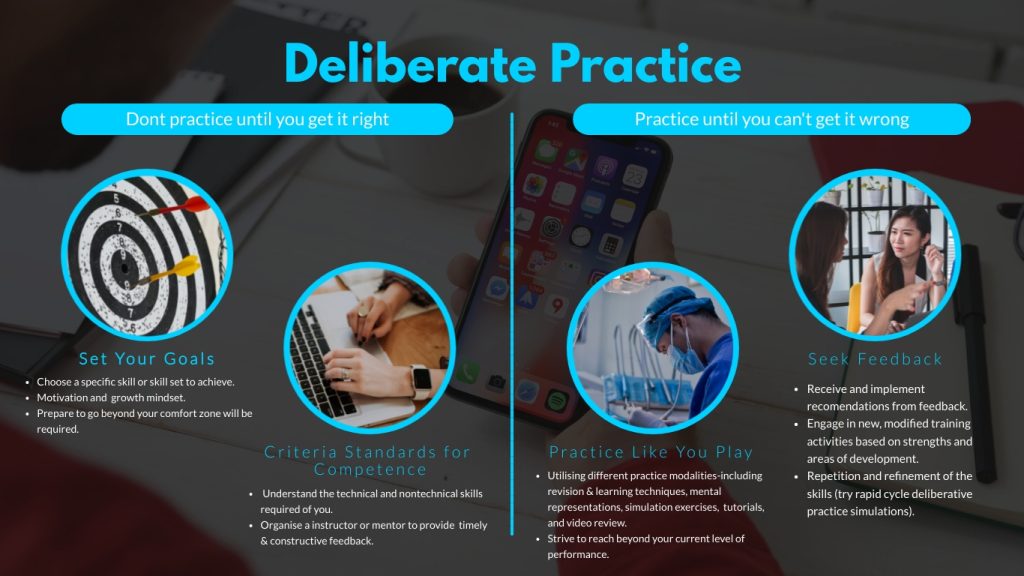
Deliberate practice transcends mere repetition; it consists of targeted, purposeful activities that are specifically designed to refine distinct aspects of one’s performance. To grasp the essence of this method, it helps to break it down into key components:
- Goal Setting: Establishing clear and well-defined objectives greatly enhances the ability to track measurable progress. For instance, a musician might set a goal to master a challenging piece within a month, breaking down their practice into manageable sections.
- Feedback Loops: Receiving real-time feedback allows individuals to make immediate adjustments to their technique. A software developer could use code reviews from peers to pinpoint weaknesses in their programming approach, leading to quicker improvements.
- Challenge Beyond Comfort Zone: Engaging in tasks that stretch abilities slightly beyond current capacities fosters development. An athlete might incorporate new, unfamiliar drills into their training to enhance their overall performance.
This method emphasizes the importance of quality over quantity in practice and actively encourages learners to venture outside their comfort zones. Renowned psychologist Anders Ericsson played a pivotal role in popularizing this concept, establishing that innate talent alone does not guarantee success. Rather, concerted effort and strategic practice shape expertise.
The Impact of Deliberate Practice
Examining the experiences of successful individuals illuminates the effectiveness of deliberate practice. Consider figures like Bill Gates or Serena Williams, both of whom have credited their achievements to rigorous practice and focus on improvement, rather than just natural talent. Additionally, the scientific understanding of this practice reveals fascinating insights into how targeted skill development impacts brain growth and neuroplasticity, enhancing cognitive functions and motor skills.
Incorporating Deliberate Practice in Everyday Life
For those keen on integrating deliberate practice into their daily routine, practical strategies abound. Start by identifying specific goals surrounding the skills you’re aiming to master—be it programming languages, musical instruments, or athletic feats. Seek constructive feedback from mentors, peers, or through self-assessment tools. Moreover, regularly assess and modify your practice challenges to ensure continued growth.
As we explore the nuanced world of deliberate practice, we uncover how this tailored approach can revolutionize not only the way skills are developed but also how passion and determination converge to unlock the full potential of individuals. Get ready to elevate your mastery to new heights, equipped with the tools and knowledge to embrace this transformative process!
DIVE DEEPER: Click here to unlock powerful self-learning techniques
The Mechanics of Deliberate Practice
Deliberate practice is not just a series of repetitive tasks; it is a structured approach tailored to enhance specific competencies. To truly harness the power of this method, it’s essential to understand the mechanics behind it. Practical application of deliberate practice involves breaking down tasks into smaller, manageable components that can be systematically improved. Here are some of the vital mechanics that drive this mode of learning:
- Active Engagement: Unlike traditional methods where passive consumption of information prevails, deliberate practice demands active involvement. This entails engaging with the material or the skills at a profound level, whether through coding projects that require troubleshooting, or music sessions where musicians experiment with different techniques.
- Focused Attention: Maintaining concentration during practice sessions ensures that individuals are fully immersed in the activity. For example, a graphic designer might set aside distractions by choosing a quiet space to enhance focus on their design process, thereby leading to higher-quality output.
- Regular Reflection: Taking the time to reflect on what was practiced is crucial for understanding the learning journey. This can manifest in the form of journaling or recording sessions to analyze progress and identify areas needing improvement. Athletes often review game footage to learn from their performance, making adjustments to refine their skills.
The iterative nature of deliberate practice means that progress is rarely linear. Skilled practitioners in fields such as technology, arts, and sports often find themselves encountering plateaus. These moments, while challenging, are critical for growth. It is crucial to remember that deliberate practice is designed to stretch one’s capabilities, and failing or struggling with a task during practice does not equate to regression; rather, it is an essential part of the learning curve.
Scientific Insights Into Development
Several studies have reinforced the impact of deliberate practice on honing technical skills. Research conducted by the University of Cambridge revealed that individuals who engaged in targeted, challenging practice performed significantly better than those who practiced passively. Neurologically, such practice fosters neuroplasticity, allowing the brain to adapt and grow through consistent effort and challenge. This biological basis solidifies why deliberate practice is not a mere recommendation, but an essential strategy for effectiveness and mastery.
Furthermore, experts like Anders Ericsson have highlighted that the amount of time spent engaged in purposeful practice significantly correlates with achieving high levels of expertise. In various fields—ranging from piano performance to computer programming—consistent engagement in deliberate practice has been shown to yield remarkable results, emphasizing its pivotal role in skill advancement.
Setting the Stage for Success
To set the stage for success in integrating deliberate practice into your routine, consider these foundational steps: Assess your current skill level, identify specific areas for improvement, and actively design a practice regimen that encompasses the mechanics of deliberate practice described above. By proactively working towards refining your technical skills through intentional practice, you will not only cultivate expertise but also enhance your confidence and motivation as you advance your capabilities.
The Role of Deliberate Practice in Developing Technical Skills
Deliberate practice is a focused approach to skill development that emphasizes intentional effort and structured feedback. This approach contrasts with traditional practice methods, which often involve repetitive tasks without a critical eye on improvement. Understanding how deliberate practice enhances technical skills can shed light on various strategies individuals and organizations might implement for development in their respective fields.
One pivotal aspect of deliberate practice is its goal-oriented nature. Practitioners are encouraged to set specific, measurable objectives that go beyond mere familiarity with a skill. For example, instead of just ‘playing the guitar,’ a musician might focus on mastering a challenging piece within a predetermined timeframe. This targeted approach helps in refining techniques and accelerating the learning process.
Furthermore, receiving immediate feedback plays a crucial role in the effectiveness of deliberate practice. Feedback is essential for recognizing errors and understanding the correct techniques. In a coaching or mentor scenario, constructive criticism can help learners adjust their approaches quickly, thereby avoiding the pitfalls of incorrect practice. This real-time correction amplifies learning and drives skill acquisition forward more efficiently.
Another important element is the repetition of challenging tasks. Engaging with tasks that are just beyond one’s current abilities compels the learner to stretch their capabilities. This continuous push ensures that practitioners are not complacent and are constantly evolving in their skill set. For example, a software developer might focus on solving progressively more complex algorithms to build their coding proficiency. Such repetition, combined with the right level of challenge, fortifies learning.
Lastly, it is important to highlight how motivation and persistence are intertwined with deliberate practice. Those who continually engage in this type of practice often demonstrate a high degree of intrinsic motivation. Their willingness to tackle difficult tasks repeatedly, despite setbacks, indicates a commitment to long-term development, ultimately leading to superior technical skills over time.
| Advantage | Description |
|---|---|
| Structured Goals | Enhances focus and direction in skill advancement. |
| Immediate Feedback | Allows for timely corrections and better understanding of techniques. |
| Challenging Tasks | Encourages growth and minimizes complacency in skill mastery. |
| High Motivation | Promotes commitment and resilience in the face of difficulty. |
In summary, understanding the core principles of deliberate practice, including structured and challenging goals, immediate feedback, and the importance of motivation, can significantly impact the development of technical skills across various domains. Implementing these strategies can lead to profound improvements and a deeper mastery of desired competencies.
DIVE DEEPER: Click here to discover the Feynman Technique
Building Resilience Through Deliberate Practice
Technical skill development through deliberate practice is not merely a pathway to expertise; it also builds essential traits such as resilience and grit. This is particularly pertinent in the fast-paced, ever-evolving landscape of industries like technology and the arts, where changes can be rapid and unforgiving. By embracing challenges during practice, individuals not only enhance their abilities but also cultivate a robust mental framework to tackle adversities in real-world scenarios.
One of the striking aspects of deliberate practice is how it encourages individuals to step outside their comfort zones. A study from Stanford University highlighted how engaging in tasks that push one’s boundaries can significantly enhance self-efficacy—a belief in one’s capacity to execute behaviors necessary for producing specific achievements. For instance, a software engineer who routinely takes on challenging projects and embraces new programming languages is not just mastering technical skills, but is also reinforcing a resilient mindset that is crucial for navigating setbacks.
The Role of Feedback in Technical Mastery
Another fundamental element of deliberate practice is the role of feedback. Effective feedback transforms mere repetition into a powerful learning experience. It gives practitioners the essential insights necessary to update and refine their techniques. In practice, this could involve seeking critiques from peers or mentors. A graphic designer might submit their work for review within a design community, gaining varied perspectives that illuminate areas needing attention, as well as potential opportunities for creative growth.
- Immediate Correction: Feedback can facilitate the immediate correction of mistakes, reinforcing learning cycles. For example, a musician who receives pointers on rhythm and expression during practice can make adjustments on the fly, leading to a more fluid performance.
- Long-term Development: Consistent feedback fosters a growth mindset. Researchers from the University of Pennsylvania found that individuals who actively sought out constructive feedback demonstrated significantly enhanced performance over time. This growth mindset is particularly vital in fields like tech, where innovation thrives on iterative improvement.
Integrating Technology with Deliberate Practice
The advent of technology has revolutionized the application of deliberate practice, offering tools that can amplify learning experiences. For instance, coding boot camps often incorporate gamified platforms that provide instant feedback, enabling developers to track their progress and adjust their techniques in real-time. Moreover, software like DAW (Digital Audio Workstation) for musicians allows them to experiment with their craft and receive analytics on their output, honing in on key areas for growth.
Additionally, online platforms have emerged as vital resources for practitioners. Websites dedicated to coding, music, and art have designed coursework that engages users in deliberate practice by breaking down complex skills into achievable segments, while also tracking progress over time. As a result, more individuals from diverse backgrounds are gaining access to structured methods that were once reserved for elite practitioners.
The intersection of deliberate practice and modern technology illustrates how essential it is for individuals looking to cultivate technical skills. By leveraging available resources and focusing intentionally on the craft, professionals can unlock new levels of expertise, adaptability, and creativity—a combination that is critical in today’s competitive environment.
DIVE DEEPER: Click here to discover the benefits of a skill assessment timeline
Conclusion: Elevating Technical Skills Through Deliberate Practice
In summary, deliberate practice emerges as a cornerstone in the development of technical skills across various fields. By understanding the significance of challenging oneself and stepping out of comfort zones, aspiring professionals can foster not only a mastery of their craft but also essential attributes like resilience and grit. As the landscape of industries continues to evolve, the ability to adapt and overcome challenges becomes increasingly vital.
A key takeaway from our exploration is the profound impact of feedback. Transformative feedback serves as a navigational tool, guiding practitioners toward continuous improvement and providing insights that fuel progress. The practice of actively seeking critiques positions individuals to refine their skills more efficiently, enabling them to keep pace with the ever-changing demands of their respective industries.
Moreover, the integration of technology into structured deliberate practice elevates the learning experience. With the aid of innovative platforms and tools, practitioners can access a wealth of resources that fine-tune their abilities and encourage iterative learning. This democratization of skill development makes it possible for a broader audience to harness personalized pathways to success, irrespective of background.
Ultimately, the journey of mastering technical skills through deliberate practice offers more than just proficiency in a specific area; it cultivates a mindset that prepares individuals for lifelong learning and adaptive success. As you consider embarking on your own path, remember that the commitment to regular, conscientious practice is the gateway to unlocking your full potential in today’s competitive environment.